The short answer
A balanced diet isn’t about eating perfectly, removing entire food groups or following one universal meal plan.
It is about variety, balance, adequacy and moderation: getting the nutrients and energy your body needs from a diverse range of foods while limiting foods and nutrients that can be harmful in excess. The exact combination will differ between people depending on factors such as age, activity level, health needs, culture and the foods available to them. World Health Organization
A simple way to start is to make most meals a combination of:
- vegetables and/or fruit
- a source of protein
- a whole-grain or other nutritious carbohydrate
- a source of healthy fat
- water or another appropriate unsweetened drink
It doesn’t have to look the same every day.
What Is a Balanced Diet?
The phrase “balanced diet” can sound more complicated than it really is.
At its core, a balanced diet provides enough energy and nutrients to support your body’s needs while including a wide variety of foods.
The World Health Organization describes four core principles of a healthy diet:
Adequacy. Balance. Moderation. Diversity. World Health Organization
That means your diet should provide the nutrients you need, have an appropriate balance of energy and nutrients, avoid excessive amounts of foods or nutrients that can negatively affect health, and include a variety of nutritious foods.
There isn’t one perfect menu that everyone needs to follow.
Your age, activity level, health status, cultural food traditions, preferences and access to food can all influence what a healthy diet looks like for you. World Health Organization
The goal isn’t to eat perfectly. It’s to eat well, consistently, most of the time.
What Should a Balanced Meal Contain?
One useful way to think about a balanced meal is to look at the different roles food can play rather than counting every calorie.
1. Vegetables and fruit
Vegetables and fruit provide fibre, vitamins, minerals and other compounds that contribute to a healthy diet.
WHO recommends that people over the age of 10 aim for at least 400 grams of fruit and vegetables per day. World Health Organization
That doesn’t mean every meal needs to contain five different vegetables.
Think about variety across the day.
You might have:
- leafy greens
- tomatoes
- carrots
- peppers
- broccoli
- berries
- oranges
- apples
- bananas
- melon
- other locally available fruits and vegetables
Fresh isn’t the only option. Frozen and canned fruit and vegetables can also contribute to a healthy diet, particularly when they don’t contain added sugars or excessive sodium. World Health Organization
2. Protein
Protein helps the body build and maintain tissues and is an important part of a balanced eating pattern.
Protein can come from many different foods, including:
- beans
- lentils
- peas
- chickpeas
- eggs
- fish
- poultry
- meat
- tofu
- nuts and seeds
- other protein-rich foods
The best choice doesn’t have to be the same every day.
Variety matters.
WHO notes that diets containing a greater variety of nutritious foods—including legumes, nuts, whole grains, fruits and vegetables—are associated with a greater likelihood of meeting vitamin and mineral requirements. World Health Organization
3. Carbohydrates
Carbohydrates are not something you automatically need to eliminate to eat healthily.
They are one of the body’s major sources of energy.
The more useful question is:
Which carbohydrates are you eating most often?
WHO recommends that carbohydrates come primarily from foods such as whole grains, vegetables, fruits and pulses. World Health Organization
Examples include:
- oats
- brown rice
- whole-grain bread
- whole-grain pasta
- maize
- millet
- quinoa
- potatoes and other starchy foods
- beans and lentils
- fruits
Harvard’s Healthy Eating Plate similarly emphasizes whole grains and notes that the quality of carbohydrate sources matters, rather than treating all carbohydrates as nutritionally identical. The Nutrition Source
4. Healthy fats
Fat is an essential nutrient. Your body needs dietary fat for normal functions, including the absorption of certain vitamins.
But different fats have different health effects.
WHO recommends favouring unsaturated fats over saturated fats and avoiding industrially produced trans fats. Sources of unsaturated fats include foods such as fish, avocado, nuts and certain vegetable oils. World Health Organization
Healthy-fat sources can include:
- nuts
- seeds
- avocado
- fish
- olive oil
- sunflower oil
- rapeseed/canola oil
- other unsaturated vegetable oils
The point isn’t to remove fat.
It’s to pay attention to the type and amount of fat in your overall diet.
A Simple Way to Build Your Plate
A useful visual model is Harvard’s Healthy Eating Plate, which suggests making roughly half of a meal vegetables and fruit, one quarter whole grains and one quarter healthy protein, alongside healthy oils and water.
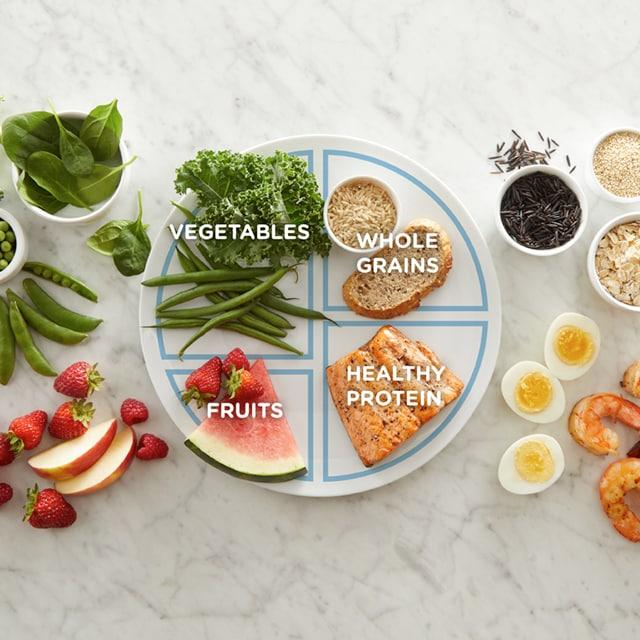
But there’s an important distinction:
This is a practical meal-building guide, not a universal prescription that every meal must follow exactly.
A person’s nutritional needs can vary, and WHO explicitly notes that the composition of a healthy diet differs according to factors such as age, lifestyle, physical activity, culture and locally available foods. World Health Organization
So think of the plate as a starting point, not a rulebook.
What Does This Look Like in Real Life?
A balanced meal could be as simple as:
Option 1
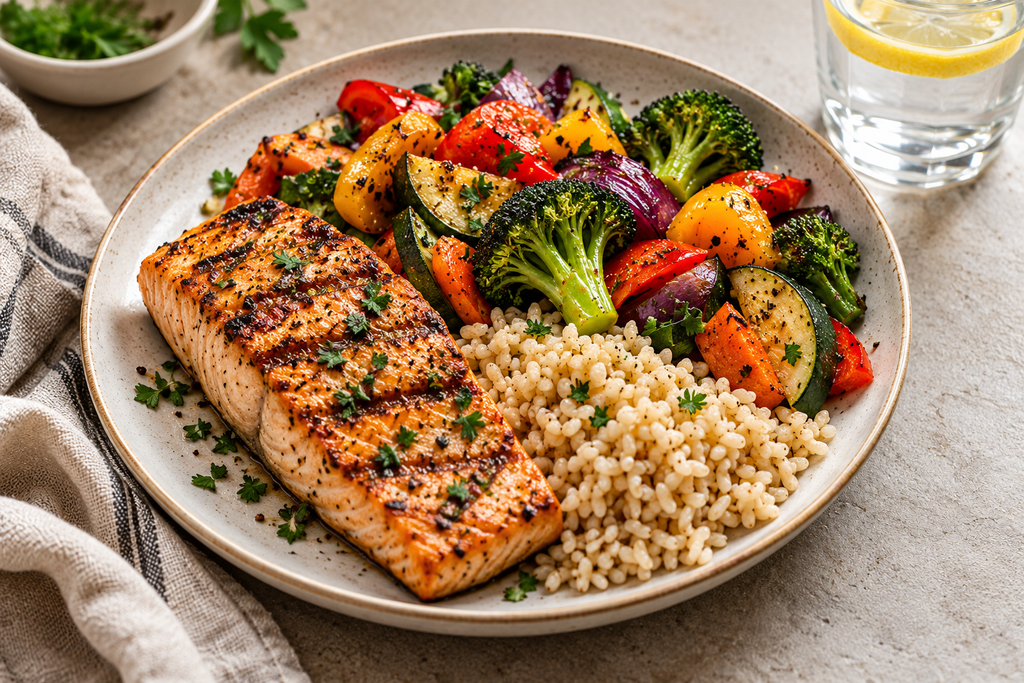
Vegetables: roasted vegetables
Protein: grilled fish
Carbohydrate: brown rice
Fat: a small amount of unsaturated cooking oil
Drink: water
Option 2
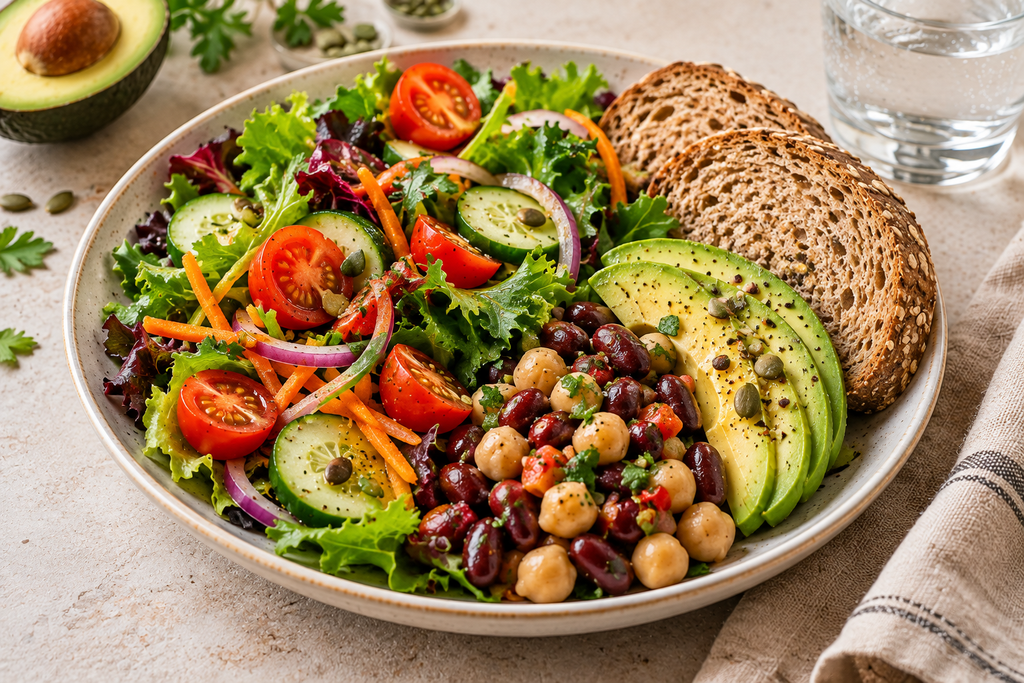
Vegetables: mixed salad
Protein: beans
Carbohydrate: whole-grain bread
Fat: avocado
Drink: water
Option 3
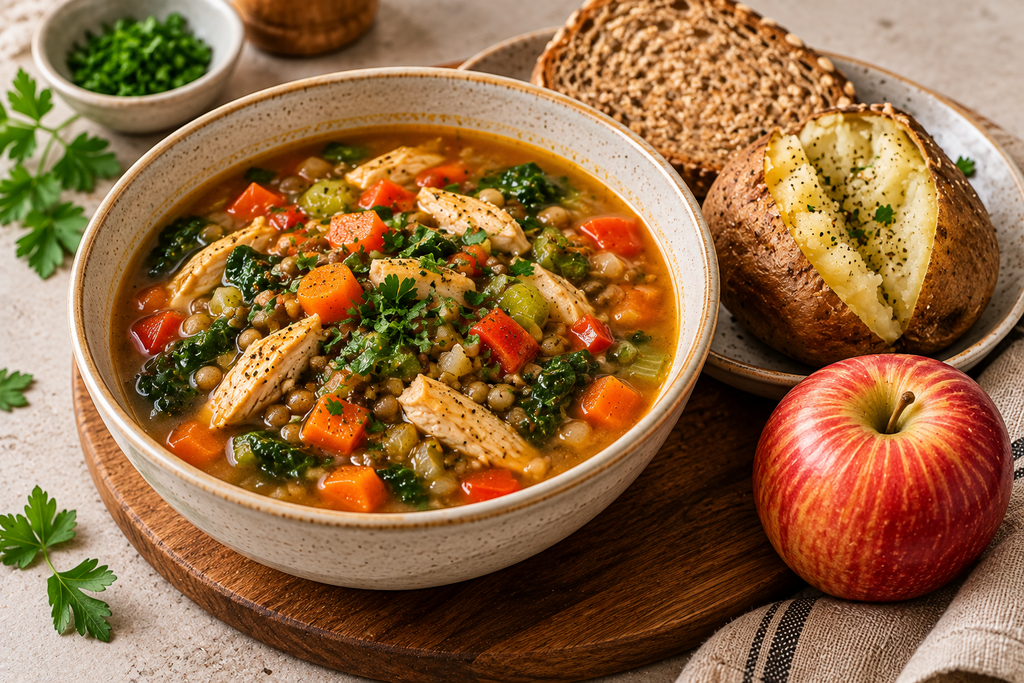
Vegetables: vegetable soup
Protein: lentils or chicken
Carbohydrate: whole grain, potato or another staple
Fruit: a piece of fruit
Option 4
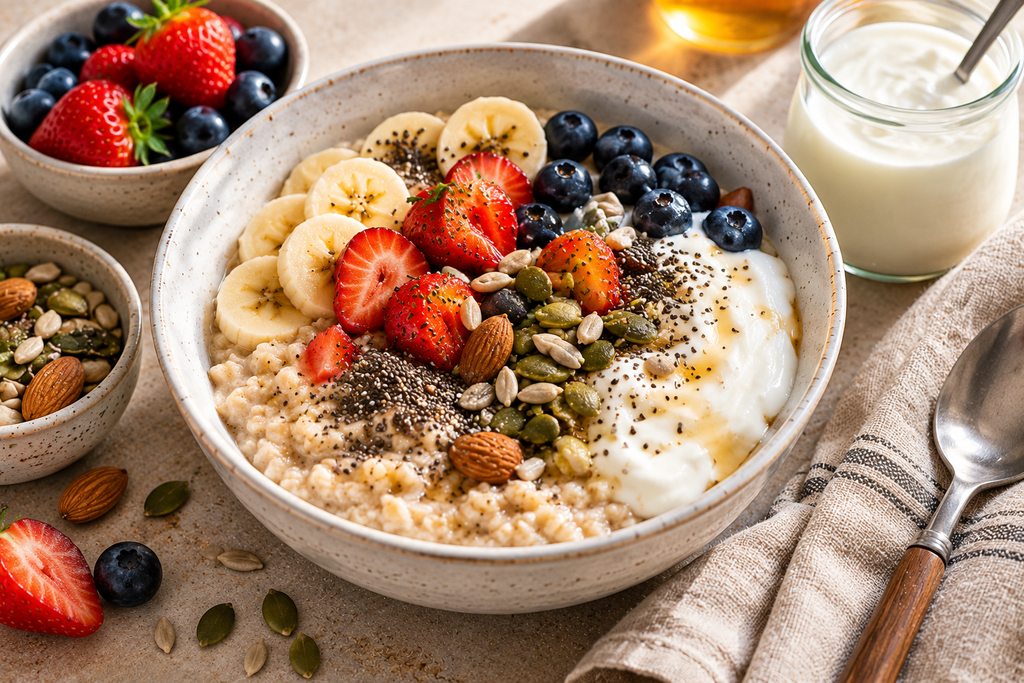
Breakfast: oats + fruit + nuts/seeds + plain yoghurt
Option 5
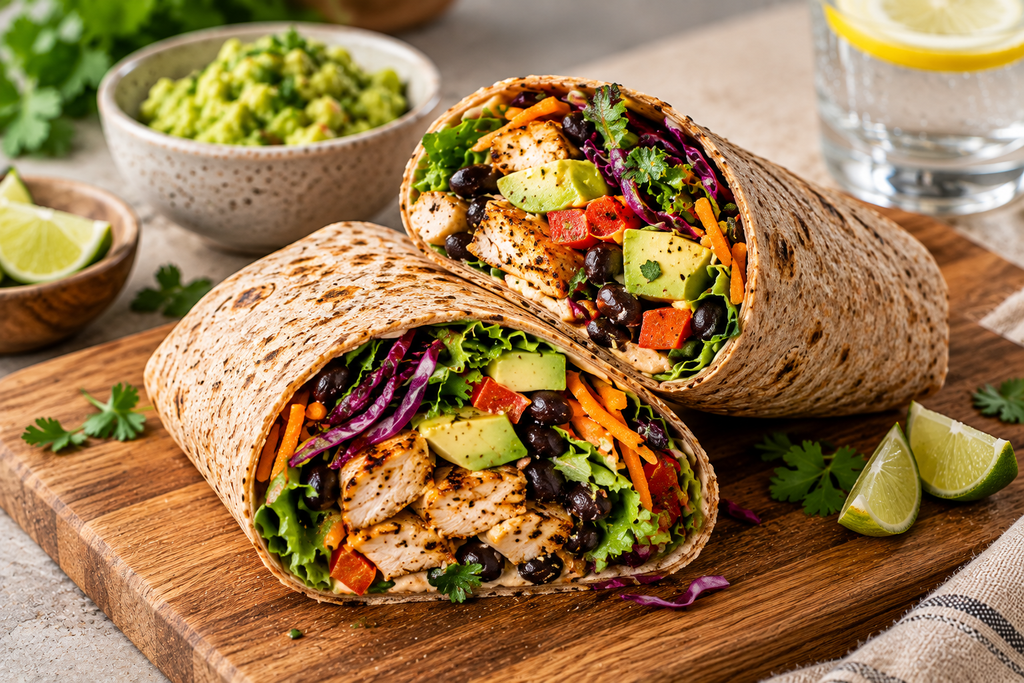
Quick meal: whole-grain wrap + vegetables + beans/chicken/tofu + avocado
Notice something important?
There isn’t one “healthy meal.”
There are many.
That’s why a balanced diet is better understood as an overall eating pattern rather than a single perfect plate.
Do You Need to Eat Perfectly at Every Meal?
No.
A healthy diet isn’t undone because you had dessert, ordered takeaway or ate a meal that contained fewer vegetables than usual.
What matters more is the overall pattern of your diet over time.
Healthy eating also needs to be realistic.
If your approach requires you to cook elaborate meals every day, avoid foods you enjoy, count everything you eat and feel guilty whenever you deviate from the plan, it may be difficult to sustain.
Instead, look for small improvements.
You might:
- add a vegetable to one more meal
- choose whole grains more often
- include a protein source at breakfast
- replace sugary drinks with water more often
- add fruit to your usual snack
- use more unsaturated fats
- eat a wider variety of foods
Small changes can become part of a sustainable eating pattern.
Do You Need to Cut Out Carbohydrates?
For most people, there is no general need to eliminate carbohydrates simply because they contain carbohydrates.
WHO identifies carbohydrates as a major source of energy and recommends that they primarily come from unrefined sources such as whole grains, vegetables, fruits and pulses. World Health Organization
The more useful distinction is between different carbohydrate-rich foods.
Compare:
More often:
Whole grains, fruits, vegetables and legumes.
Less often:
Foods and drinks high in free sugars or heavily refined foods.
That doesn’t mean refined foods are automatically forbidden.
It means they don’t need to make up the majority of your diet.
What About Sugar?
Sugar is one part of the overall diet—not the only thing that determines whether a diet is healthy.
WHO recommends limiting free sugars to less than 10% of total daily energy intake, with a further reduction to 5% or less potentially providing additional health benefits. World Health Organization
Free sugars include sugars added to foods and drinks, as well as sugars naturally present in honey, syrups and fruit juices. World Health Organization
This is different from saying:
“Never eat sugar.”
A healthier approach is to understand where most of the added or free sugars in your diet are coming from and reduce them where practical.
For example:
Instead of:
Having sugary drinks throughout the day.
Consider:
Making water your usual drink and having sweetened drinks less often.
What About Salt?
Sodium is an essential nutrient, but consuming too much can contribute to high blood pressure and cardiovascular risk.
WHO recommends that adults consume less than 5 grams of salt per day, equivalent to less than 2 grams of sodium. World Health Organization
Salt can come from more places than the salt shaker.
Depending on where you live and what foods you eat, significant amounts may come from processed foods, sauces, condiments, packaged foods and prepared meals. World Health Organization
You don’t necessarily need to remove salt completely.
Instead, pay attention to the overall amount you’re consuming.
What About Highly Processed Foods?
Not every processed food is automatically unhealthy.
Processing can include simple things such as freezing, drying, fermenting, pasteurising or cooking.
The bigger concern is often foods that are highly processed and contain substantial amounts of ingredients such as sodium, free sugars or unhealthy fats.
WHO identifies minimally processed and unprocessed foods as the foundation of a healthy diet and recommends limiting foods high in unhealthy fats, free sugars and sodium. World Health Organization
So rather than asking:
“Is this food processed?”
A more useful question can be:
“How does this food fit into my overall eating pattern?”
Healthy Eating Doesn’t Have to Look the Same Everywhere
One of the biggest misconceptions about healthy eating is that there is a single “correct” cuisine.
There isn’t.
A balanced diet can be built from foods and meals that are familiar to different cultures and communities.
Rice can be part of a healthy diet.
Bread can be part of a healthy diet.
Potatoes can be part of a healthy diet.
Beans can be part of a healthy diet.
Pasta can be part of a healthy diet.
Fish, eggs, meat, tofu, lentils and other protein sources can all fit into different eating patterns.
What matters is the overall combination, variety, amounts and frequency.
WHO explicitly recognizes that healthy diets vary according to cultural context, locally available foods and dietary customs. World Health Organization
That is why Linda Togo’s approach should never imply that one country’s food culture is the universal model for healthy eating.
A Simple Balanced-Meal Formula
When you’re unsure what to eat, try asking yourself five questions:
01 — Where are my vegetables or fruit?
Add one or more.
02 — Where is my protein?
Choose a protein-rich food.
03 — What is my main carbohydrate?
Prefer nutrient-rich sources more often.
04 — Where is my healthy fat?
Think nuts, seeds, avocado, fish or an unsaturated cooking oil.
05 — What am I drinking?
Water is a simple everyday choice.
You don’t need to calculate everything.
You simply need a useful framework.
7 Simple Habits for More Balanced Eating
1. Add before you subtract
Instead of immediately removing foods, look for nutritious foods you can add.
2. Increase variety
Try different fruits, vegetables, grains, legumes, nuts, seeds and protein sources.
3. Make water your default drink
This can reduce your reliance on sugar-sweetened beverages.
4. Include protein regularly
Different meals can use different protein sources.
5. Choose whole or minimally processed foods more often
Make them the foundation of your eating pattern where practical. World Health Organization
6. Don’t fear carbohydrates or fats
Focus on food quality and overall balance rather than eliminating entire nutrient groups.
7. Don’t aim for perfection
A sustainable eating pattern should work with your real life.
Frequently Asked Questions
What is the simplest definition of a balanced diet?
A balanced diet provides the energy and nutrients your body needs through a varied combination of foods, while maintaining appropriate balance and moderation. WHO identifies adequacy, balance, moderation and diversity as core principles of a healthy diet. World Health Organization
Is a balanced diet the same for everyone?
No. Nutritional needs and appropriate dietary patterns can differ based on age, activity level, health status, cultural context and other individual factors. World Health Organization
Do I need to count calories to eat a balanced diet?
Not necessarily. Calorie tracking can be useful for some people in specific circumstances, but it isn’t required for everyone to build healthier eating habits.
Can I eat carbohydrates and still have a healthy diet?
Yes. WHO recommends carbohydrates primarily from sources such as whole grains, vegetables, fruits and pulses. World Health Organization
Do I need to stop eating sugar completely?
No. WHO’s guidance focuses on limiting free sugar intake rather than requiring people to eliminate every source of sweetness from their diet. World Health Organization
What is the healthiest food?
There isn’t one food that can provide everything your body needs. Variety is one of the fundamental principles of a healthy diet. World Health Organization
Is the 50/25/25 plate method mandatory?
No. The Harvard Healthy Eating Plate is a practical visual guide rather than a universal requirement. Individual dietary needs vary. The Nutrition Source
When should I speak to a nutrition professional?
If you have a diagnosed health condition, significant food restrictions, unexplained changes in weight, persistent digestive symptoms, nutritional deficiencies, or specific dietary requirements, individualized advice from an appropriately qualified healthcare professional can be valuable.
The Takeaway
A balanced diet doesn’t have to be complicated.
Think variety rather than perfection.
Think nutrient-rich foods rather than restrictive rules.
Think overall patterns rather than individual meals.
And remember that healthy eating can look different from one person, culture and life stage to another.
The goal isn’t to create the perfect plate.
It’s to build an eating pattern that gives your body what it needs and works in your real life.