You do not need a gym membership to become stronger, improve your fitness or build a regular exercise routine.
Your home can be enough.
A chair, a mat, a resistance band or a pair of light weights can give you plenty of options, but you can also begin with nothing more than your own bodyweight.
The most important part is having a routine that challenges you appropriately and that you can realistically maintain.
Can you get fit without a gym?
Yes.
A gym gives you access to a wide range of equipment, but fitness does not depend on where you exercise.
You can train your muscles with bodyweight movements, increase your heart rate through cardio exercises, work on mobility and flexibility, and progressively make exercises more challenging at home.
For general health, adults are advised to get at least 150 minutes of moderate-intensity aerobic activity or 75 minutes of vigorous-intensity activity each week, alongside muscle-strengthening activities on at least two days each week. (WHO)
A home workout can contribute to both parts of that recommendation.
The goal is not to recreate a commercial gym in your living room. It is to create a routine that gives your body different types of movement and gradually becomes more challenging as your fitness improves.
The four things your routine should include
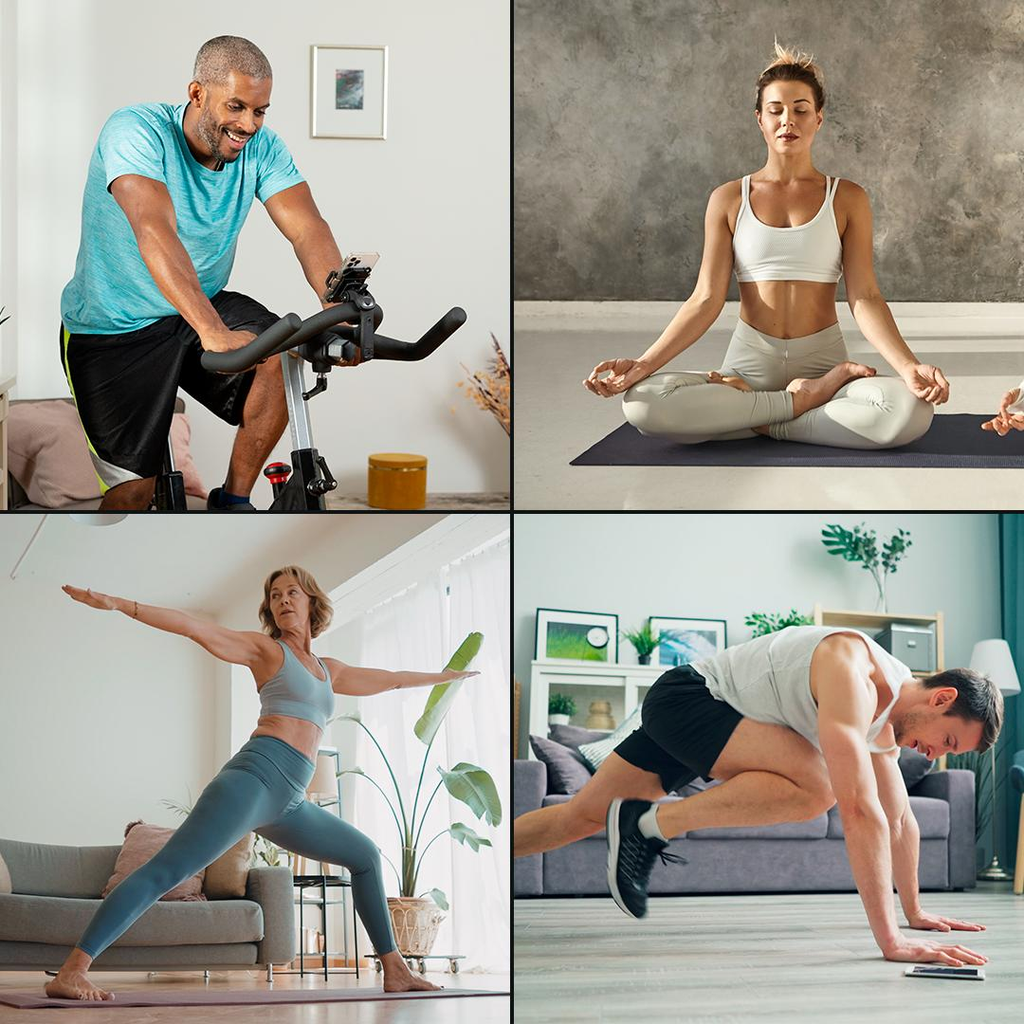
A balanced home exercise routine can include four broad areas:
- Strength
- Cardiovascular exercise
- Mobility
- Recovery
You do not need to train all four areas in every workout.
For example, one day could focus on strength while another focuses on walking or cardio. A short mobility session can be added before or after exercise.
Recovery matters too. Your body needs time to adapt to training, particularly when you are introducing new movements or increasing your workload.
A simple weekly routine can therefore be more useful than trying to do everything in one session.
Bodyweight exercises
Bodyweight exercises use your own body as resistance.
They are particularly useful for beginners because you can learn basic movement patterns without needing much equipment.
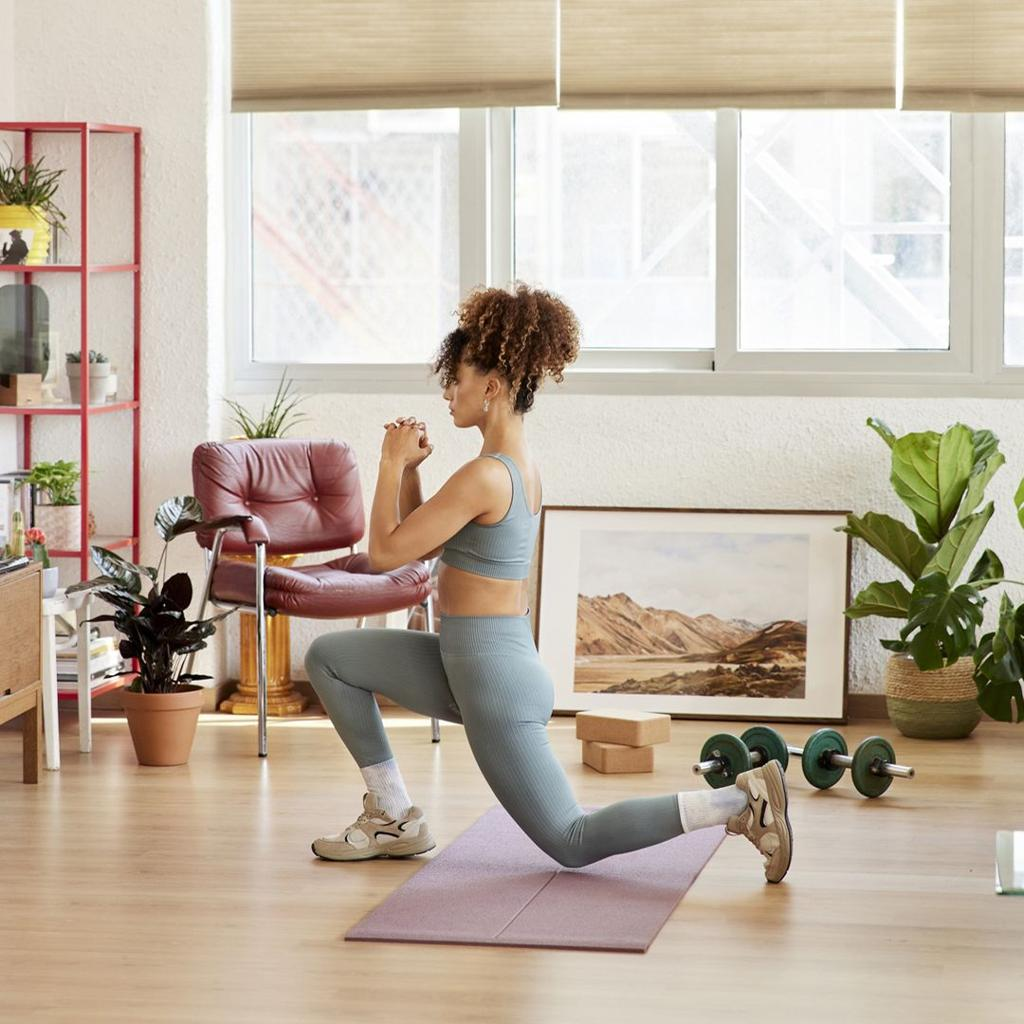
Some useful movements include:
Squats
Squats work several muscles in your lower body and can be adapted to different fitness levels.
If a standard squat feels difficult, you can start by sitting down and standing up from a sturdy chair.
Lunges
Lunges challenge the legs and hips while also requiring balance and coordination.
You can start with reverse lunges if stepping forward feels uncomfortable.
Push-ups
Push-ups work the chest, shoulders, arms and core.
Beginners can start with wall push-ups or incline push-ups using a sturdy elevated surface before progressing towards floor push-ups.
Glute bridges
Glute bridges work the muscles around your hips and buttocks and can be performed on the floor with no equipment.
Planks
Planks challenge the muscles that help stabilise your trunk.
You can begin with a shorter hold and gradually increase the duration as your control improves.
The goal is not to perform the most advanced version of every exercise.
Good technique and controlled movement matter more than making an exercise unnecessarily difficult.
Strength exercises
Strength training is an important part of a well-rounded fitness routine.
You can start with bodyweight movements, but adding resistance can give you more ways to progressively challenge your muscles.
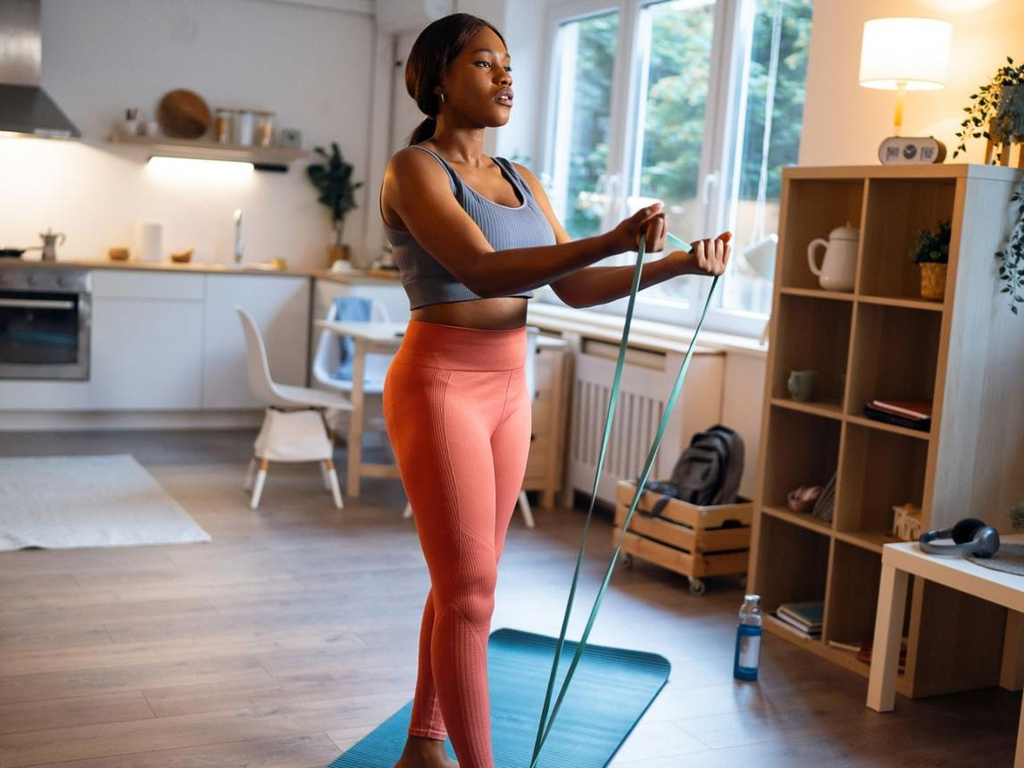
If you have some equipment available, you could use:
- Resistance bands
- Dumbbells
- Kettlebells
- Ankle weights
- A sturdy backpack filled with appropriate household items
You do not need all of them.
One pair of suitable weights or a resistance band can already give you additional options.
For beginners, focus on learning the movement first. Once you can perform an exercise comfortably with good control, you can gradually increase resistance, repetitions or sets.
Strength training does not have to mean lifting very heavy weights. The appropriate level of resistance depends on your experience, goals and current fitness level.
Cardio at home
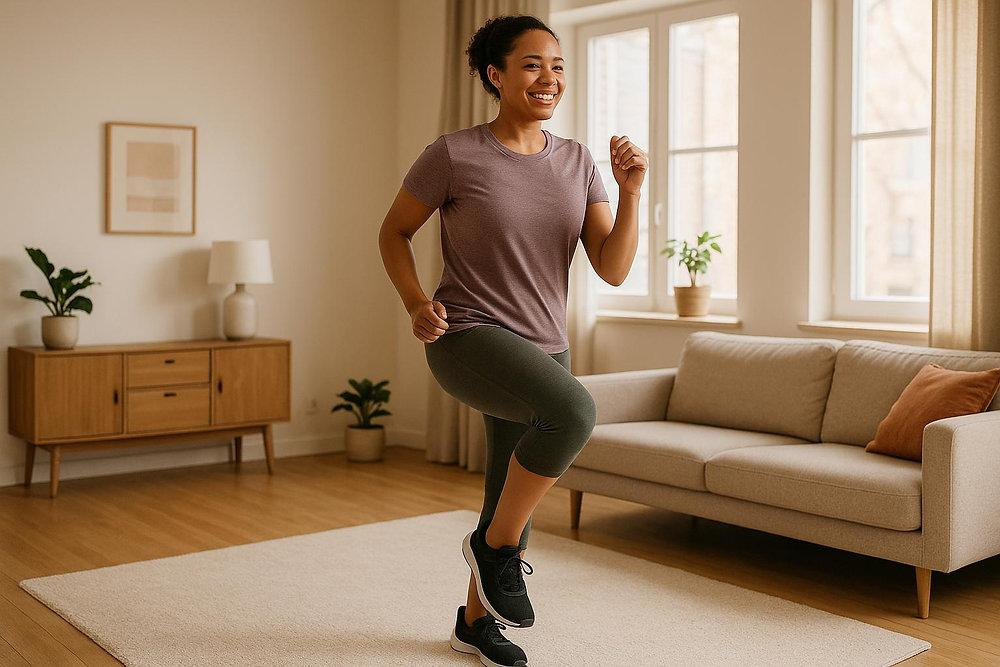
Cardiovascular exercise is another important part of your routine.
You do not necessarily need a treadmill, exercise bike or other large piece of equipment.
Some options include:
- Marching in place
- Dancing
- Step-ups on a suitable stable platform
- Jumping jacks
- Skipping rope
- Jogging in place
- Follow-along aerobic workouts
Choose the option that matches your current fitness level.
If jumping feels uncomfortable, you can use low-impact alternatives such as marching, step-touch movements or controlled step-ups.
Your heart rate and breathing should respond to the intensity of the activity. Moderate-intensity activity generally means you are breathing harder but can still talk, although you would not comfortably sing. (CDC)
You can also combine home cardio with outdoor walking, cycling or other activities.
Mobility and stretching
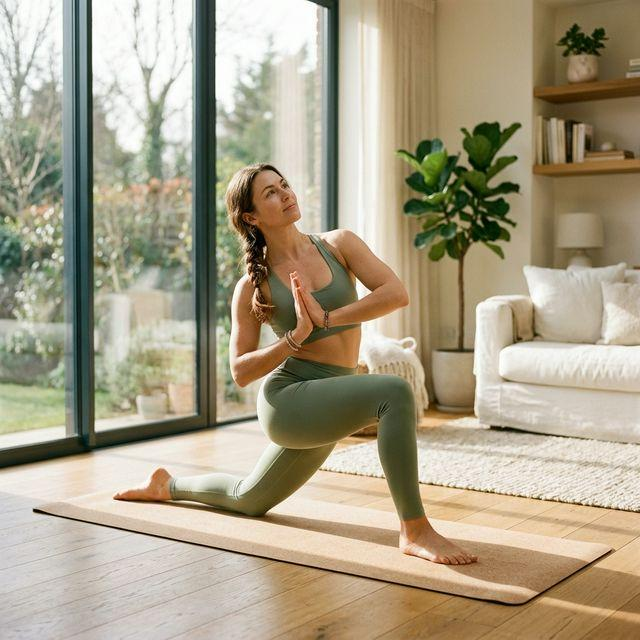
Strength and cardio are important, but your routine should not ignore how your body moves.
Mobility exercises can help you move your joints through their available range of motion, while stretching can be included as part of a broader movement routine.
Simple movements might include:
- Shoulder circles
- Hip rotations
- Cat-cow movements
- Gentle spinal rotations
- Ankle movements
- Hip flexor stretches
- Hamstring stretches
- Calf stretches
You can use a few minutes of gentle movement as part of your warm-up, then include more relaxed stretching after exercise if it feels comfortable.
Mobility work does not need to be complicated.
The aim is to keep movement varied and comfortable rather than forcing your body into positions it is not ready for.
Example beginner weekly structure
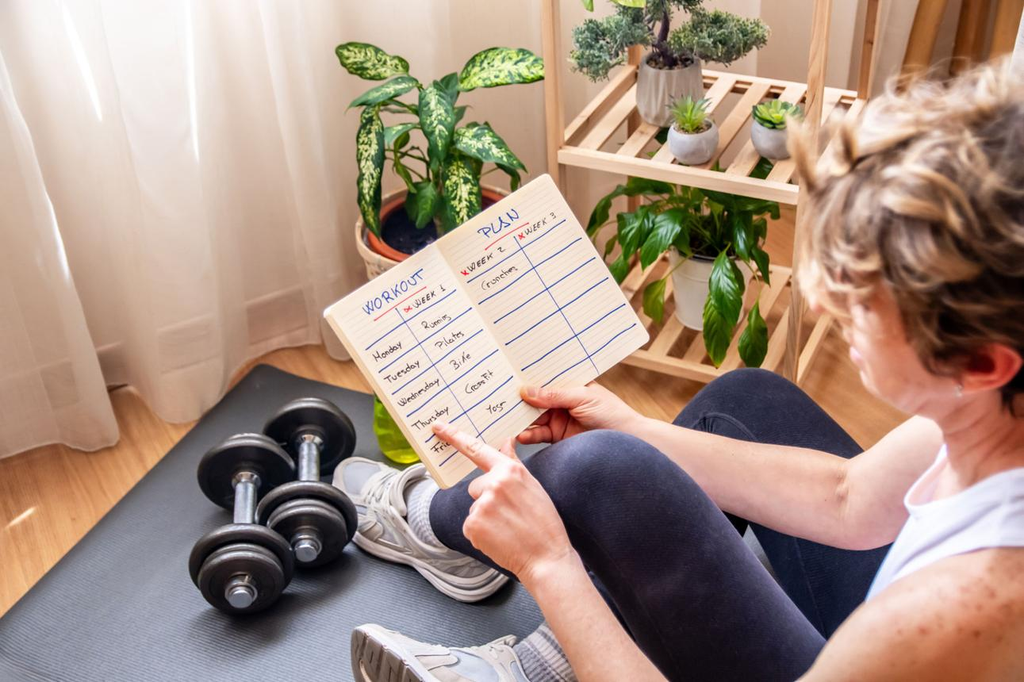
You do not need to exercise for an hour every day.
A beginner home workout routine could look something like this:
Monday: Full-body strength
- Squats
- Incline push-ups
- Glute bridges
- Reverse lunges
- Plank
Spend around 20 to 30 minutes exercising at a comfortable level.
Tuesday: Light movement
Take a walk, do some gentle mobility work or simply stay active throughout the day.
Wednesday: Cardio
Try 20 to 30 minutes of dancing, marching, low-impact aerobics or another cardio activity you enjoy.
Thursday: Rest or gentle mobility
Give your body a chance to recover.
Friday: Full-body strength
Repeat your basic strength routine or introduce a few variations.
Saturday: Longer activity
Go for a walk, cycle, dance, hike or participate in another activity you enjoy.
Sunday: Recovery
Take an easy day with gentle movement if you feel like it.
This is only an example.
Your schedule can be shorter, longer or structured differently depending on your current fitness level, available time and goals.
How to progress when the workout becomes easy
Doing the same workout forever may eventually stop providing enough challenge.
This is where progression becomes useful.
You can make an exercise more challenging by changing one variable at a time.
Increase repetitions
If you can comfortably perform 8 repetitions, you might gradually work towards 10 or 12.
Add another set
Instead of doing two sets, you could eventually perform three.
Increase resistance
If you are using weights or resistance bands, gradually increasing resistance can provide a greater challenge.
Slow down the movement
A controlled movement can increase the time your muscles spend working.
Choose a more challenging variation
For example, you might progress from wall push-ups to incline push-ups and eventually to floor push-ups.
Improve your range of motion
Where appropriate, performing a movement through a comfortable greater range can increase its challenge.
You do not need to change everything at once.
Progress gradually and give your body time to adapt.
Common home-workout mistakes
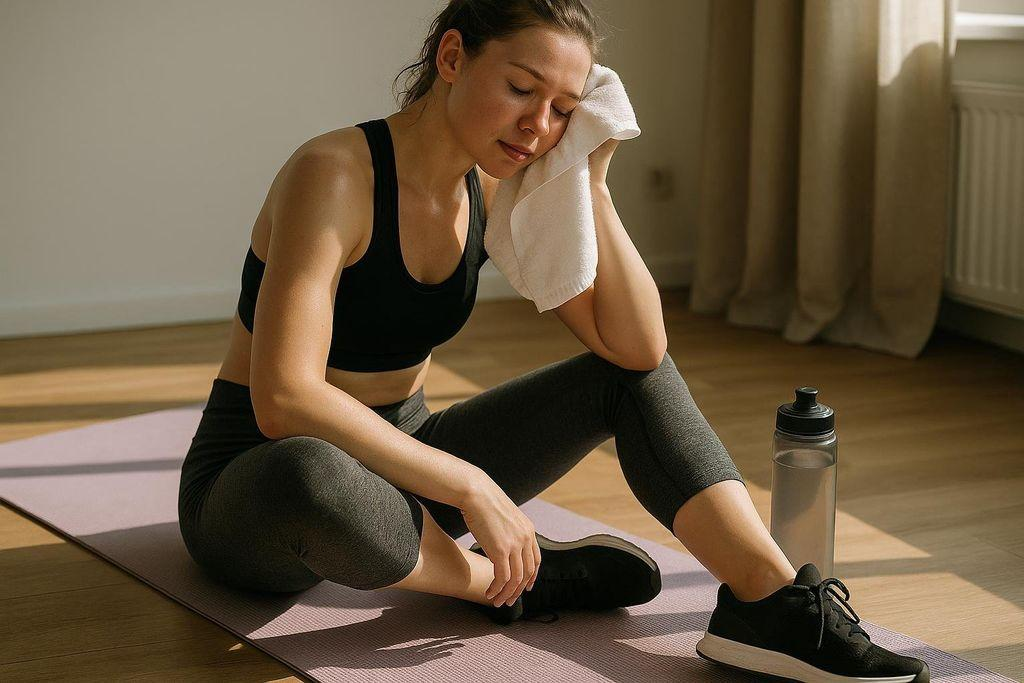
Trying to do too much too soon
Starting with intense daily workouts can leave you exhausted or excessively sore.
Build gradually instead.
Ignoring technique
More repetitions do not make an exercise better if your form is breaking down.
Learn the movement and prioritise control.
Only doing cardio
Cardio is valuable, but a balanced routine should also include muscle-strengthening activities.
Only training the muscles you can see
A well-rounded routine should include movements that challenge different areas of your body.
Skipping warm-ups
A few minutes of gentle movement can help you transition into your workout.
Never taking rest days
Recovery is part of training.
Rest does not mean doing nothing. A recovery day could include gentle walking or mobility work if that feels appropriate.
Expecting every workout to feel amazing
Some days you will have more energy than others.
The goal is consistency over time, not making every workout your hardest session.
How to make your home workouts sustainable
The best home workout routine is one you can actually maintain.
Start with a realistic amount of exercise rather than building a schedule that leaves no room for normal life.
You could begin with three structured sessions each week and add more activity as your fitness and confidence improve.
It also helps to make exercise convenient.
Keep your workout mat somewhere visible. Put your resistance bands where you can easily access them. Choose a specific time of day for your workout. Have a short version of your routine for busy days.
For example, if you normally plan a 30-minute workout but only have 10 minutes available, do a shorter session rather than skipping movement completely.
Consistency becomes easier when your routine can adapt to real life.
When should you modify your workout?
Not every exercise is appropriate for every person.
If you have an injury, significant pain, a chronic health condition, mobility limitations or another health concern, your exercise routine may need to be adapted.
If you are unsure which exercises are appropriate for you, particularly if you are returning to exercise after a long period of inactivity or managing a health condition, speak with a qualified healthcare professional or appropriately qualified exercise professional.
During exercise, stop if you experience concerning symptoms such as chest pain, fainting or severe unexplained shortness of breath and seek appropriate medical attention.
The bottom line
You do not need a gym to build a useful exercise routine.
A home workout can include bodyweight strength exercises, resistance training, cardio, mobility and recovery. The key is to start at an appropriate level, learn good movement patterns and gradually increase the challenge.
You also do not need to make every workout complicated.
A few basic exercises performed consistently can give you a strong foundation.
Start with what you have.
Your bodyweight is enough to begin.
FAQs
Can you get fit with home workouts?
Yes. Home workouts can help improve strength, cardiovascular fitness, mobility and physical activity levels. The results depend on the type of exercise, consistency, progression and your individual starting point.
Is a home workout as good as going to the gym?
A gym provides more equipment and opportunities for resistance training, but you can still build a useful fitness routine at home. The best environment depends on your goals, preferences, available equipment and what you can maintain consistently.
Can I build muscle with a no-equipment workout?
Bodyweight exercises can strengthen your muscles, particularly when exercises provide enough challenge. As you become stronger, you may need more challenging variations or additional resistance to continue progressing.
What is a good beginner home workout?
A simple beginner workout could include squats, incline push-ups, glute bridges, reverse lunges and a plank. Start with manageable repetitions and focus on controlled technique.
How many days a week should I work out at home?
There is no single schedule that works for everyone. A beginner might start with two or three structured strength sessions per week while adding walking or other moderate activity on other days. Adults should also aim for at least 150 minutes of moderate aerobic activity each week and muscle-strengthening activities on at least two days. (WHO)
Can I work out at home without equipment?
Yes. Squats, lunges, push-ups, glute bridges, planks and many other movements can be performed without equipment.
Do I need to work out every day?
No. Your weekly activity pattern matters more than exercising every single day. Rest and recovery are also important parts of a sustainable routine.
What if I am completely new to exercise?
Start slowly. Choose simple movements, use manageable durations and focus on learning good technique. As your fitness improves, you can gradually increase the amount or intensity of exercise.
Start Where You Are
You do not need to wait until you have the perfect equipment, the perfect space or the perfect schedule.
Clear a small area.
Put on something comfortable.
Choose three or four simple exercises and begin.
Your first home workout does not need to be impressive. It just needs to be a starting point.