Strength training can seem intimidating when you are new to it.
You may not know which exercises to do, how much weight to lift, how many repetitions to complete or whether you need to join a gym.
The good news is that you can start much more simply.
Strength training is about challenging your muscles against resistance. That resistance can come from weights, resistance bands, machines or your own bodyweight.
You do not need to lift heavy weights from day one. You need to learn the basic movements, use an appropriate level of resistance and gradually give your body more challenge as you become stronger.
What is strength training?
Strength training, also called resistance training, involves making your muscles work against resistance.

That resistance might come from:
- Dumbbells
- Barbells
- Resistance bands
- Weight machines
- Kettlebells
- Your own bodyweight
- Other suitable forms of resistance
When you regularly challenge your muscles, your body adapts to the demands placed on it.
Strength training can help improve muscle strength and physical function. It is also particularly relevant to healthy ageing because maintaining muscle strength can make everyday activities such as climbing stairs, getting out of a chair and carrying groceries easier. National Institute on Aging
Strength training is different from cardiovascular exercise such as walking, cycling or running, although the two can work very well together.
A balanced fitness routine can include both.
Why strength matters
Strength is useful beyond the gym.
Think about the things you do every day:
Carrying shopping bags.
Getting up from a chair.
Climbing stairs.
Picking something up from the floor.
Lifting a child.
Moving furniture.
Opening a heavy door.
These activities require your muscles to produce force.
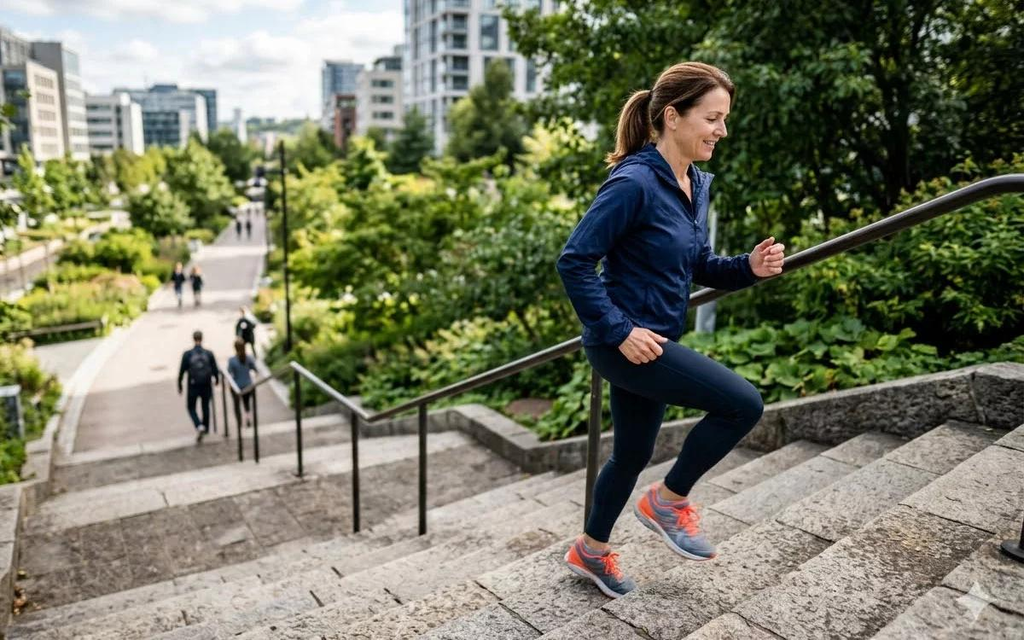
Maintaining muscle strength can support physical function and independence, particularly as we get older. Research highlighted by the National Institute on Aging shows that strength training can help maintain muscle mass, improve mobility and support everyday function in older adults. National Institute on Aging
Strength training can also complement other forms of exercise.
Walking can support cardiovascular fitness. Mobility work can help you move comfortably. Balance exercises can support stability. Strength training gives your muscles a reason to remain strong.
You do not have to choose one type of exercise.
Do you need a gym?
No.
A gym can give you access to more equipment, but it is not a requirement for strength training.
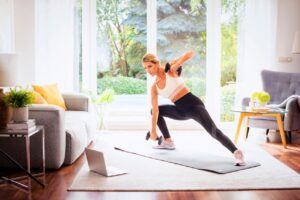
You can begin at home with bodyweight exercises such as:
- Squats
- Lunges
- Push-ups
- Glute bridges
- Step-ups
- Planks
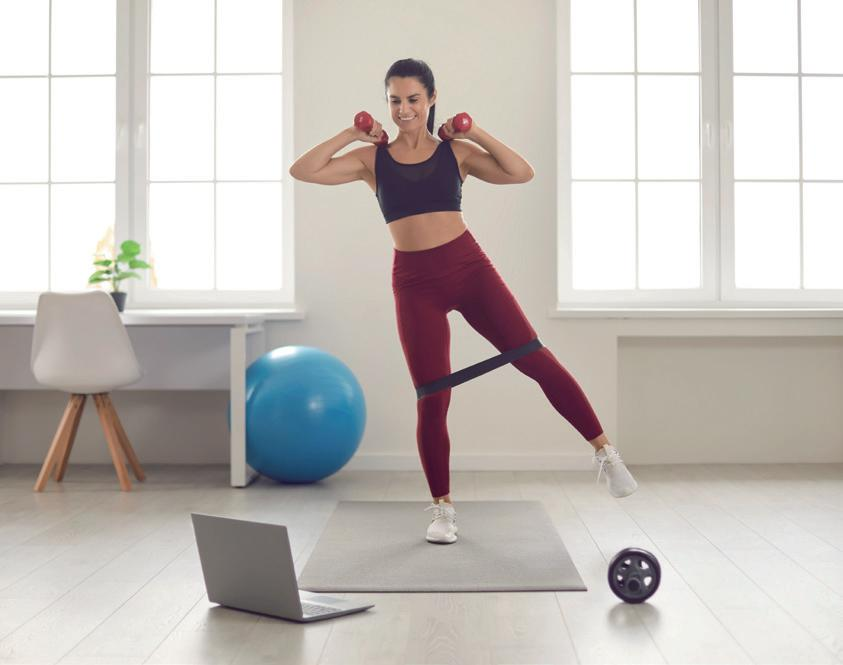
As you progress, you can add resistance bands, dumbbells or other equipment.
If you prefer a gym environment, machines and free weights provide more options for progressively increasing resistance.
The important thing is not where you train.
It is whether your routine gives your muscles an appropriate challenge and whether you can maintain it consistently.
The basic movement patterns
Rather than memorising dozens of exercises, start by understanding a few fundamental movement patterns.
Squat
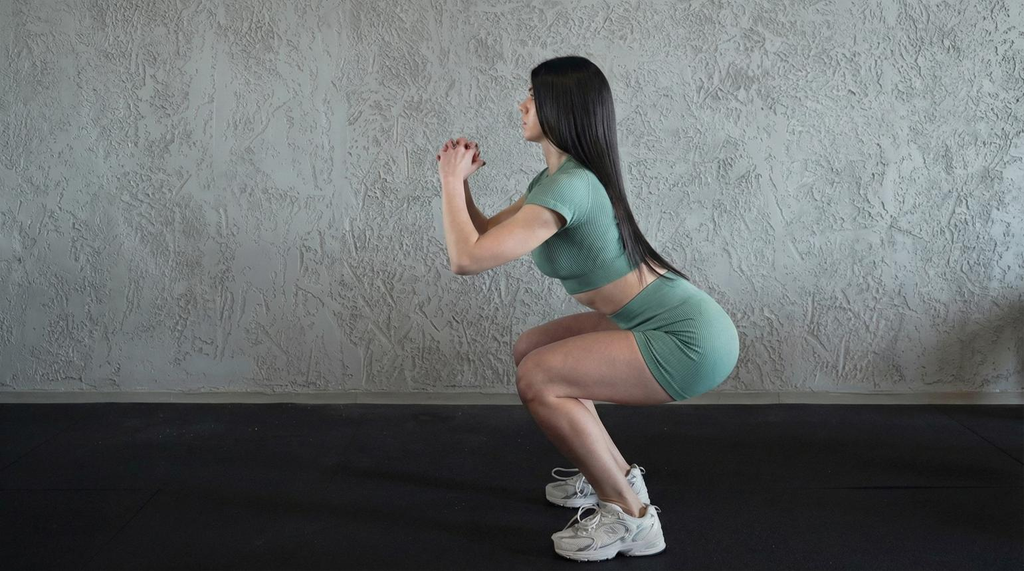
Squatting involves bending at the hips and knees and then standing back up.
It trains several muscles in your lower body and has a direct connection to everyday movements such as getting up from a chair.
Hinge
A hip hinge involves moving from the hips while keeping your spine controlled.
Deadlift variations are an example of a hinge movement.
For beginners, learning the movement pattern with little or no weight is often more useful than immediately trying to lift heavily.
Push
Push movements involve moving resistance away from your body.
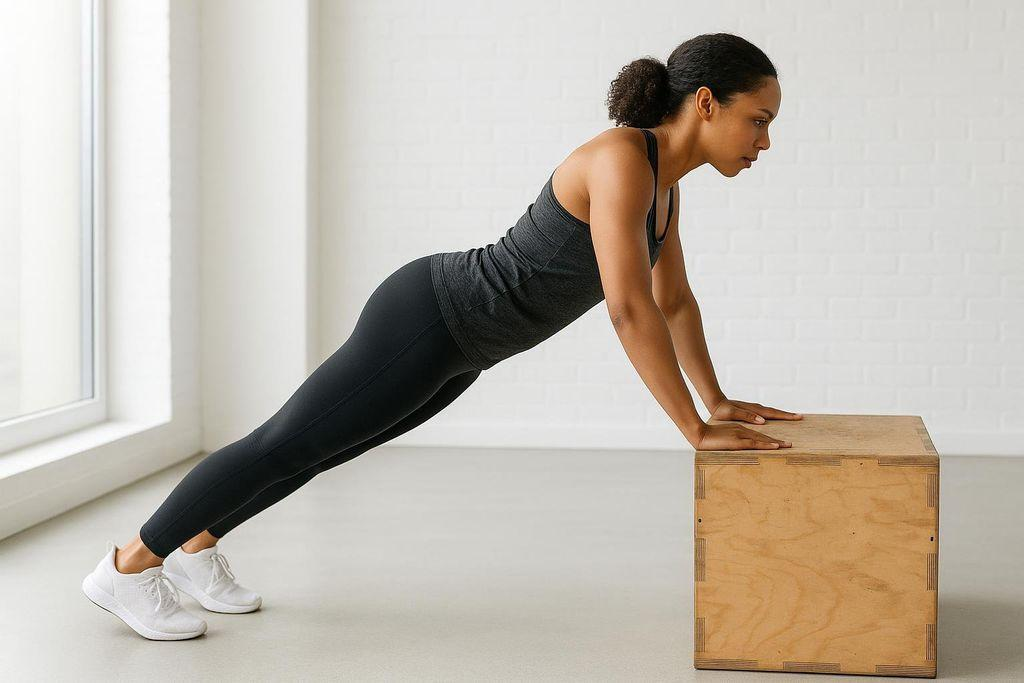
Examples include:
- Push-ups
- Chest presses
- Overhead presses
Pull
Pull movements involve bringing resistance towards your body.
Examples include:
- Resistance-band rows
- Dumbbell rows
- Seated rows
Lunge
Lunge movements involve stepping into different positions while lowering and raising your body.
They challenge your legs while also requiring balance and coordination.
Carry
Carrying a weight while walking is another simple way to challenge your muscles.
A farmer’s carry, for example, involves holding weights at your sides while walking with controlled posture.
These patterns give you a useful foundation for building a full-body routine.
How often should beginners train?
For general health, adults are recommended to perform muscle-strengthening activities involving the major muscle groups on at least two days each week. World Health Organization
That does not mean you need to spend hours lifting weights.
A beginner could start with two full-body strength sessions each week.
For example:
Monday: Full-body strength
Tuesday: Walking or another light activity
Wednesday: Rest or mobility
Thursday: Full-body strength
Friday: Walking or cardio
Saturday: Optional recreational activity
Sunday: Rest
This is only an example. Your schedule can be adjusted around your lifestyle and fitness level.
If you are completely new to resistance training, starting with two manageable sessions can be more realistic than trying to train intensely every day.
Your muscles also need time to recover between challenging sessions.
How to choose resistance
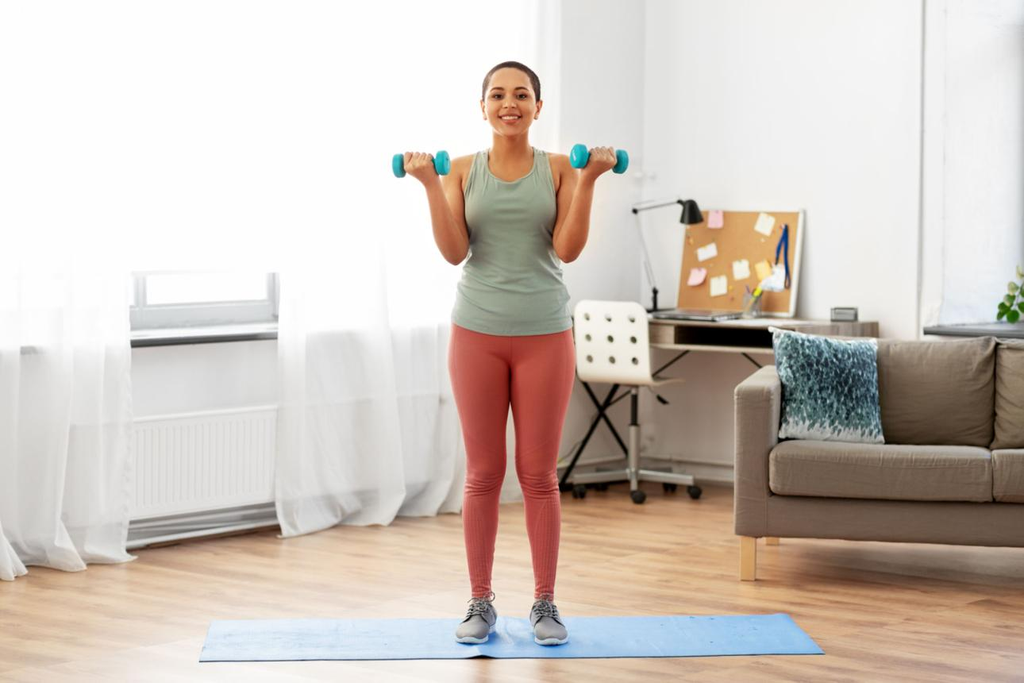
Choosing the right weight is one of the most common questions beginners have.
The answer is not simply “choose the heaviest weight you can lift.”
You want enough resistance to challenge your muscles while still allowing you to perform the exercise with good technique.
A useful starting point is to choose a resistance that allows you to complete a set of controlled repetitions while making the final repetitions feel challenging.
The CDC notes that muscle-strengthening activities should work the major muscle groups and that a common starting range is 8 to 12 repetitions per exercise, with at least one set. Two or three sets can provide additional benefit. CDC
For example, if you are doing dumbbell squats and could comfortably perform 30 repetitions without much effort, the resistance may not be providing enough challenge.
On the other hand, if you cannot maintain good technique after just a few repetitions, the resistance may be too demanding.
Start conservatively.
You can always increase the resistance later.
Why technique matters
When you are new to strength training, learning how to move well should come before trying to lift more weight.
Good technique helps you control the exercise and understand how your body is moving.
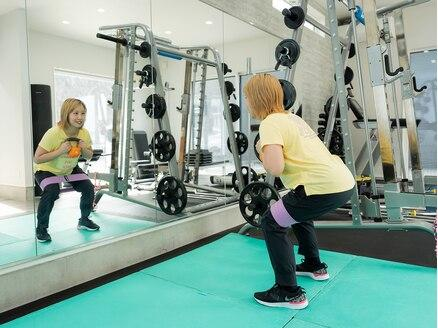
For example, during a squat, you want to maintain control rather than rushing through repetitions.
During a dumbbell row, avoid using momentum to swing the weight.
During a push-up, choose a variation that allows you to maintain control throughout the movement.
You should also remember to breathe.
A common approach is to breathe out during the effort and breathe in as you return to the starting position. The National Institute on Aging specifically advises against holding your breath during strength exercises. National Institute on Aging
If you are unsure how to perform an exercise, getting guidance from a qualified fitness professional can be helpful.
How to progress safely
Once your body becomes comfortable with your routine, you need to give it a reason to continue adapting.
This does not mean making every workout harder.
Progress gradually.
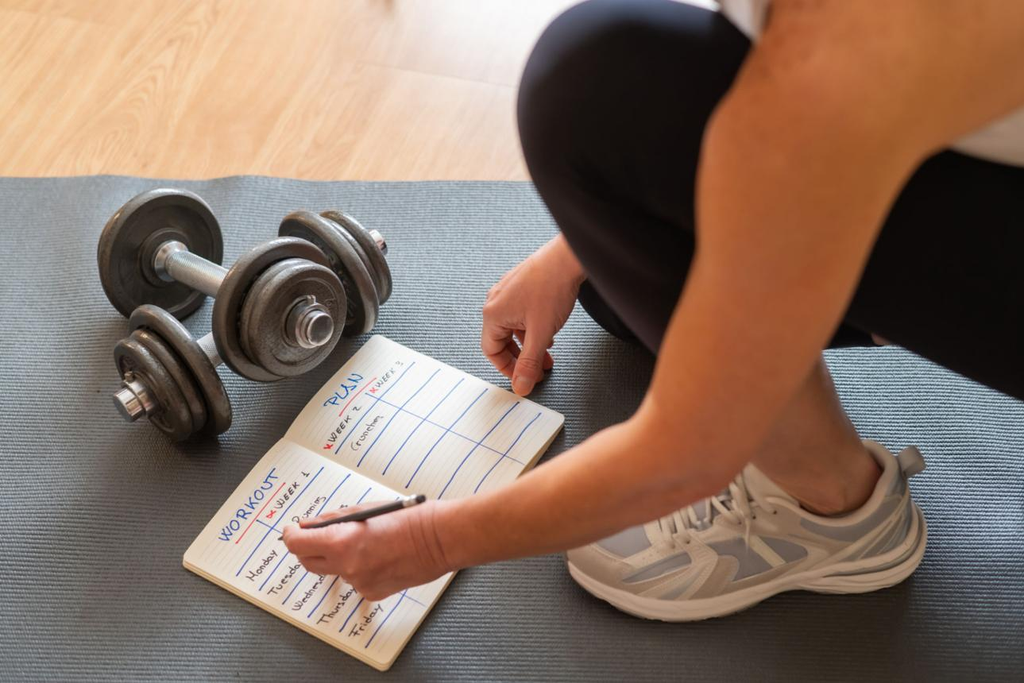
You can progress by:
Increasing repetitions
If you can comfortably perform 8 repetitions, you may gradually work towards 10 or 12.
Adding another set
You could progress from one set to two, then eventually three when appropriate.
Increasing resistance
Once you can perform your current resistance comfortably with good technique, you can consider moving to a slightly heavier weight or stronger resistance band.
Improving control
Slowing down the movement and maintaining control can increase the challenge without immediately adding more weight.
Choosing a harder variation
You might progress from wall push-ups to incline push-ups and eventually to floor push-ups.
You do not need to progress every week.
Your body needs time to adapt, and your progress will not always be linear.
The National Institute on Aging recommends gradually increasing the frequency, intensity and duration of physical activity rather than making large changes too quickly. National Institute on Aging
What should a beginner strength workout look like?
You can keep your first workouts simple.
For example:
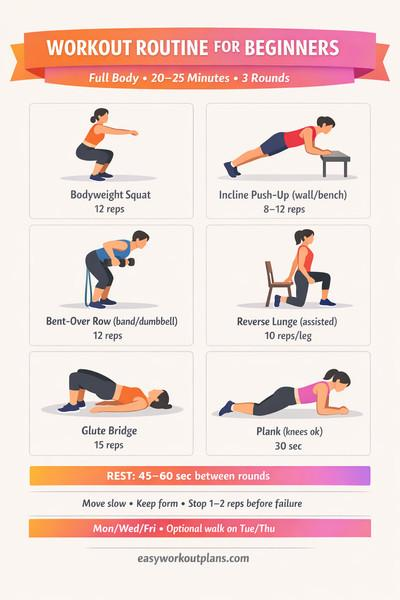
Beginner full-body routine
Squat: 8 to 12 repetitions
Incline push-up: 8 to 12 repetitions
Glute bridge: 10 to 15 repetitions
Dumbbell or resistance-band row: 8 to 12 repetitions
Reverse lunge: 8 to 10 repetitions per side
Plank: 15 to 30 seconds
Start with one or two sets and rest between exercises as needed.
This is an example, not a prescription. Your appropriate repetitions, resistance and exercise selection will depend on your fitness level and individual circumstances.
How long should a strength workout take?
It does not need to take an hour.
A beginner full-body session can be relatively short, particularly when you are learning the exercises.
A 20 to 30-minute workout can be enough to give you a useful strength-training session.
As you become more experienced, you may choose to train for longer or add more exercises and sets.
The important thing is to focus on quality rather than trying to make every session as long as possible.
Common beginner mistakes
Starting too heavy
Lifting more weight than you can control can make it difficult to learn proper technique.
Start lighter and build gradually.
Changing your routine every week
Your body needs repeated exposure to movements to become more comfortable and stronger.
You do not need a completely different workout every time.
Ignoring recovery
Strength training creates a training stimulus. Your body needs recovery time to adapt.
Comparing yourself with experienced lifters
Someone who has been training for five years should not be your benchmark when you are on week one.
Focus on your own progress.
Doing only exercises you enjoy
It is fine to have favourite exercises, but a balanced routine should work the major muscle groups rather than repeatedly training only one area.
Holding your breath
Remember to breathe throughout your repetitions. National Institute on Aging
Trying to progress too quickly
More weight is not automatically better.
Gradual progression gives you more opportunity to maintain good technique and adapt to training.
When should you get professional guidance?
Many people can begin moderate physical activity safely, but individual circumstances matter.
If you have a chronic health condition, an injury, significant pain, a disability or another concern that could affect exercise, speak with a qualified healthcare professional about the type and amount of activity that is appropriate for you. The CDC specifically recommends discussing increased physical activity with a doctor when chronic conditions or other relevant circumstances are present. CDC
A qualified exercise professional can also help you learn unfamiliar movements and adjust exercises to your abilities.
You do not need to wait until something goes wrong before asking for guidance.
The bottom line
Strength training does not have to be complicated.
You can start with bodyweight exercises, learn a few basic movement patterns and gradually introduce resistance as you become more comfortable.
For general health, adults should include muscle-strengthening activity on at least two days each week, alongside regular aerobic activity. World Health Organization
Start light.
Learn the movements.
Focus on control.
Give your body time to recover.
Then gradually increase the challenge.
That is a much more useful starting point than worrying about how much weight someone else is lifting.
FAQs
What is the best strength training for beginners?
A good starting point is a full-body routine built around basic movements such as squats, hinges, pushes, pulls, lunges and core exercises. Begin with manageable resistance and focus on learning good technique.
How many days a week should a beginner do strength training?
For general health, adults should perform muscle-strengthening activities involving the major muscle groups at least two days per week. World Health Organization
Can I start strength training without weights?
Yes. Bodyweight exercises can provide resistance and are a useful way to learn basic movements before adding external resistance.
How much weight should a beginner lift?
Choose a resistance that allows you to perform controlled repetitions while still making the final repetitions challenging. Start conservatively and increase resistance gradually as your technique and strength improve.
How many repetitions should beginners do?
A common starting range is 8 to 12 repetitions per exercise, although the appropriate number can vary depending on the exercise, resistance and individual. The CDC identifies 8 to 12 repetitions as one practical range for muscle-strengthening activities. CDC
Can strength training help with healthy ageing?
Yes. Maintaining muscle strength is important for physical function and independence as we age. Strength training can help maintain muscle mass and strength and support everyday activities. National Institute on Aging
Is strength training safe for beginners?
Strength training can be appropriate for beginners when exercises and resistance are matched to their abilities and increased gradually. People with injuries, chronic conditions or other health concerns should seek appropriate professional guidance.
Do I need to be strong before starting strength training?
No. Strength training is one of the ways you develop strength. Start at a level that is appropriate for you and gradually build from there.
Start With the Basics
You do not need to know every exercise in the gym.
You do not need to lift heavy weights.
You do not need a complicated programme.
Start with a few fundamental movements. Learn how they feel. Practise your technique. Give yourself enough recovery time and gradually make the exercises more challenging.
Strength is something you build.
And your first workout is simply the place to begin.