How much exercise do you really need to stay healthy?
You may hear that you need to work out every day, spend hours in the gym or complete intense workouts to get meaningful health benefits.
The reality is more practical.
Physical activity includes much more than structured workouts. Walking, cycling, dancing, swimming, household activities and active forms of transport can all contribute to your overall movement.
For adults, current physical activity guidelines generally recommend at least 150 minutes of moderate-intensity aerobic activity each week, or 75 minutes of vigorous-intensity activity, along with muscle-strengthening activities on at least two days each week.
You can spread this activity throughout the week and adapt it to your lifestyle.
The goal is not to find the most demanding exercise routine.
It is to find a level of movement that you can maintain.
What counts as physical activity?
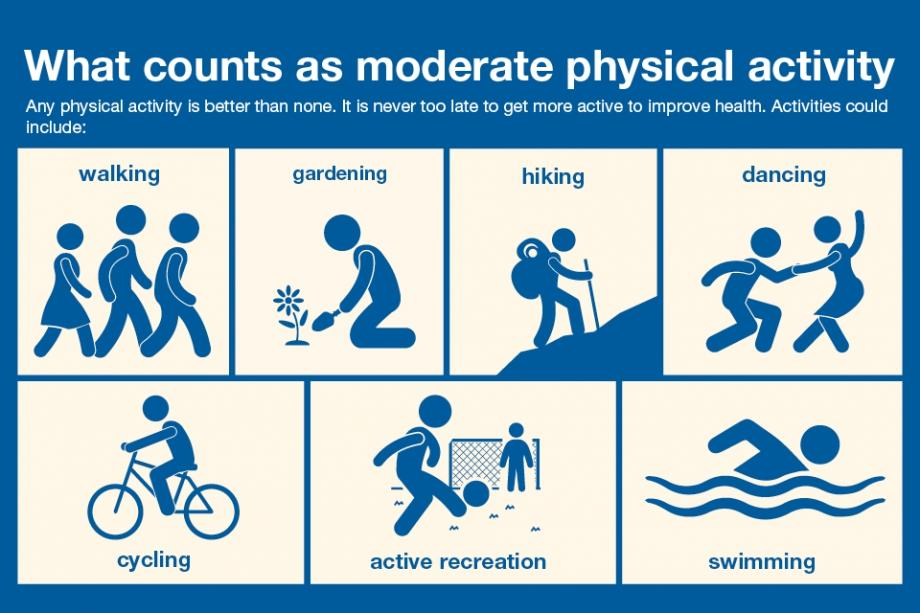
Physical activity is any movement produced by your muscles that requires energy.
That includes formal exercise, but it also includes many activities you may already do throughout the day.
Examples include:
Walking
Cycling
Swimming
Dancing
Running
Playing sports
Gardening
Climbing stairs
Household activities
Walking to work or the shops
Active play
Exercise is usually planned and structured physical activity, such as going for a run, attending a fitness class or following a strength training programme.
Both everyday movement and planned exercise contribute to an active lifestyle.
This matters because you do not have to become a gym enthusiast to become more physically active.
How much aerobic activity should adults get?

For adults, widely used physical activity guidelines recommend:
At least 150 minutes of moderate-intensity aerobic physical activity per week
or
At least 75 minutes of vigorous-intensity aerobic physical activity per week
You can also combine moderate and vigorous activity.
For additional health benefits, adults can aim for around 300 minutes of moderate-intensity activity per week.
You do not need to complete all of this at once.
For example, 150 minutes could look like:
30 minutes of brisk walking five days a week.
Or 25 minutes of moderate activity six days a week.
Or several shorter sessions spread across the week.
The important thing is to find a pattern that fits your schedule.
What is moderate-intensity activity?
Moderate-intensity activity generally makes your heart beat faster and your breathing become more noticeable, while still allowing you to speak.
Brisk walking is a common example.
Cycling at a comfortable but purposeful pace, dancing and some forms of recreational swimming can also reach moderate intensity.
What is vigorous-intensity activity?
Vigorous activity requires more effort.
Your breathing becomes harder and it becomes difficult to maintain a conversation.
Running, fast cycling, vigorous swimming and some high-intensity sports can fall into this category.
Your fitness level affects how an activity feels, so intensity is personal.
Why Strength Training Matters

Aerobic activity is only one part of a healthy exercise routine.
Adults should also include muscle-strengthening activities on at least two days each week.
Strength training involves working your major muscle groups against resistance.
This can include:
Free weights
Resistance bands
Weight machines
Bodyweight exercises
Exercises such as squats, lunges, push-ups and certain types of lifting
Strength training can help maintain and build muscle strength and support physical function.
It becomes particularly important as we get older because maintaining muscle strength can contribute to mobility, independence and healthy ageing.
You do not necessarily need a gym to strength train.
Bodyweight exercises and resistance bands can provide useful options at home.
The right exercises and level of resistance depend on your fitness level, goals and circumstances.
Do You Have to Exercise Every Day?
No.
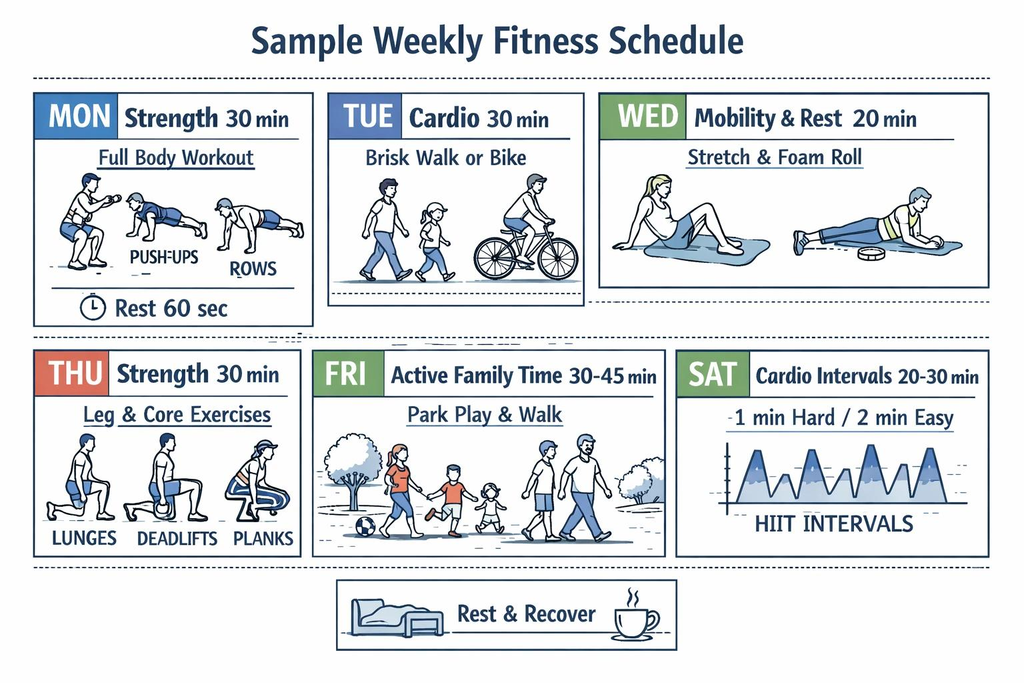
You do not have to complete a formal workout every day to benefit from physical activity.
Your weekly activity can be spread across different days depending on your schedule.
For example:
Monday: Brisk 30-minute walk
Tuesday: Strength training
Wednesday: Brisk 30-minute walk
Thursday: Rest or light movement
Friday: Strength training
Saturday: Longer walk or recreational activity
Sunday: Rest or gentle movement
This is only one example.
Some people prefer shorter daily sessions. Others have more time on certain days and less on others.
Rest is also part of an active lifestyle.
Your body needs time to recover, particularly after challenging exercise.
The right amount of recovery depends on the type and intensity of exercise, your fitness level and your individual circumstances.
Can Walking Count as Exercise?
Yes.

Walking absolutely counts as physical activity.
Brisk walking can contribute to your weekly aerobic activity.
It is also one of the easiest ways to add more movement to everyday life.
You could:
Walk during your lunch break.
Walk to nearby shops.
Take the stairs instead of the lift.
Walk while listening to a podcast.
Take an evening walk after dinner.
Park further away when practical.
Walk with a friend.
If you currently do very little physical activity, walking can be a realistic starting point.
You do not need to start by running or joining a gym.
What If You Are Starting From Zero?

If you are currently inactive, the recommended weekly target can feel intimidating.
You do not have to reach it immediately.
Start with what feels realistic.
If you currently walk for 10 minutes, try doing that regularly.
Once it becomes comfortable, gradually increase the duration.
You could move from 10 minutes to 15 minutes, then 20 minutes.
You can also divide activity into shorter sessions.
Three 10-minute walks throughout the day can be easier to fit into a busy schedule than one longer workout.
The key is progression.
You are building a habit and allowing your body to adapt.
Do not compare your starting point with someone else’s fitness routine.
How to Build a Realistic Weekly Routine
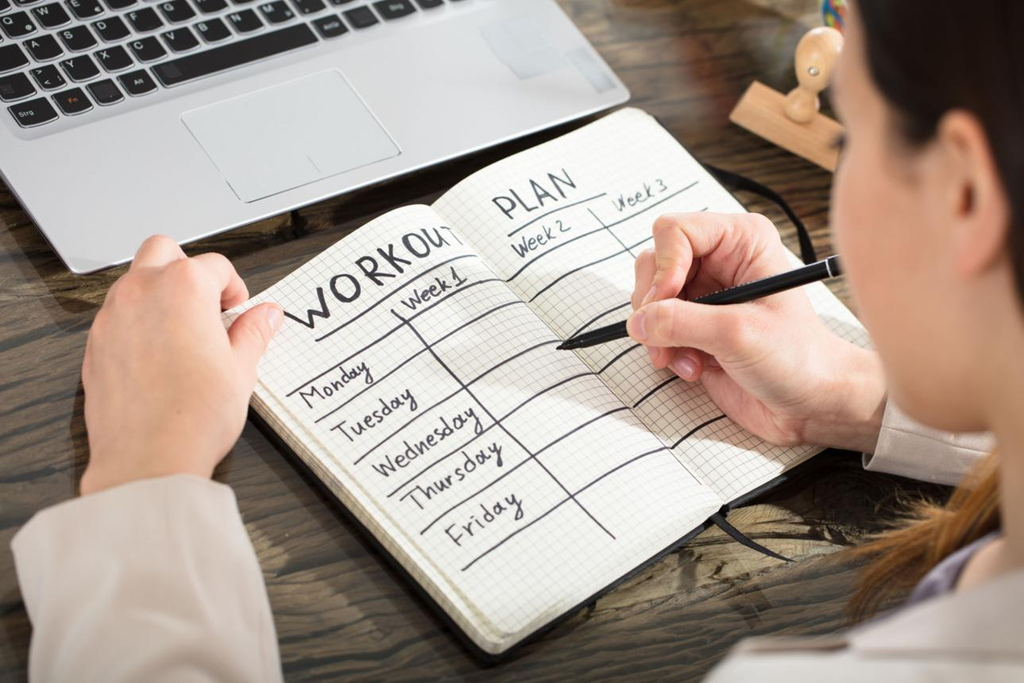
A good exercise routine should fit your actual life.
It is easy to create an ambitious plan on Sunday and abandon it by Wednesday because it requires more time and energy than you realistically have.
Instead, start with your schedule.
Start with your available time
Look at your week and identify when you genuinely have time to move.
Do not plan a one-hour workout at 6 am if you regularly struggle to wake up at that time.
Choose a time that you are more likely to maintain.
Choose activities you enjoy
Exercise is easier to sustain when you actually enjoy it.
You could walk, dance, cycle, swim, run, play a sport or strength train.
There is no requirement to choose one particular form of exercise.
Start with two or three sessions
If you are inactive, you do not need to immediately create a seven-day exercise programme.
Start with a few sessions and gradually build from there.
Include strength training
Try to include muscle-strengthening activities at least twice a week.
These sessions do not need to be extremely long.
Make movement part of your day
Exercise does not have to happen only during a formal workout.
Walk more.
Take the stairs.
Stand up regularly.
Move during breaks.
Do household activities.
Small amounts of movement can add up across the day.
Keep your routine flexible
If you miss a workout, do not abandon the entire week.
Move when you have another opportunity.
Consistency over time matters more than completing every planned session perfectly.
A Simple Weekly Exercise Example
Here is one way an active week could look.
Monday

30-minute brisk walk.
Tuesday

30-minute strength training session.
Wednesday

30-minute cycling session or brisk walk.
Thursday

Rest or gentle movement.
Friday
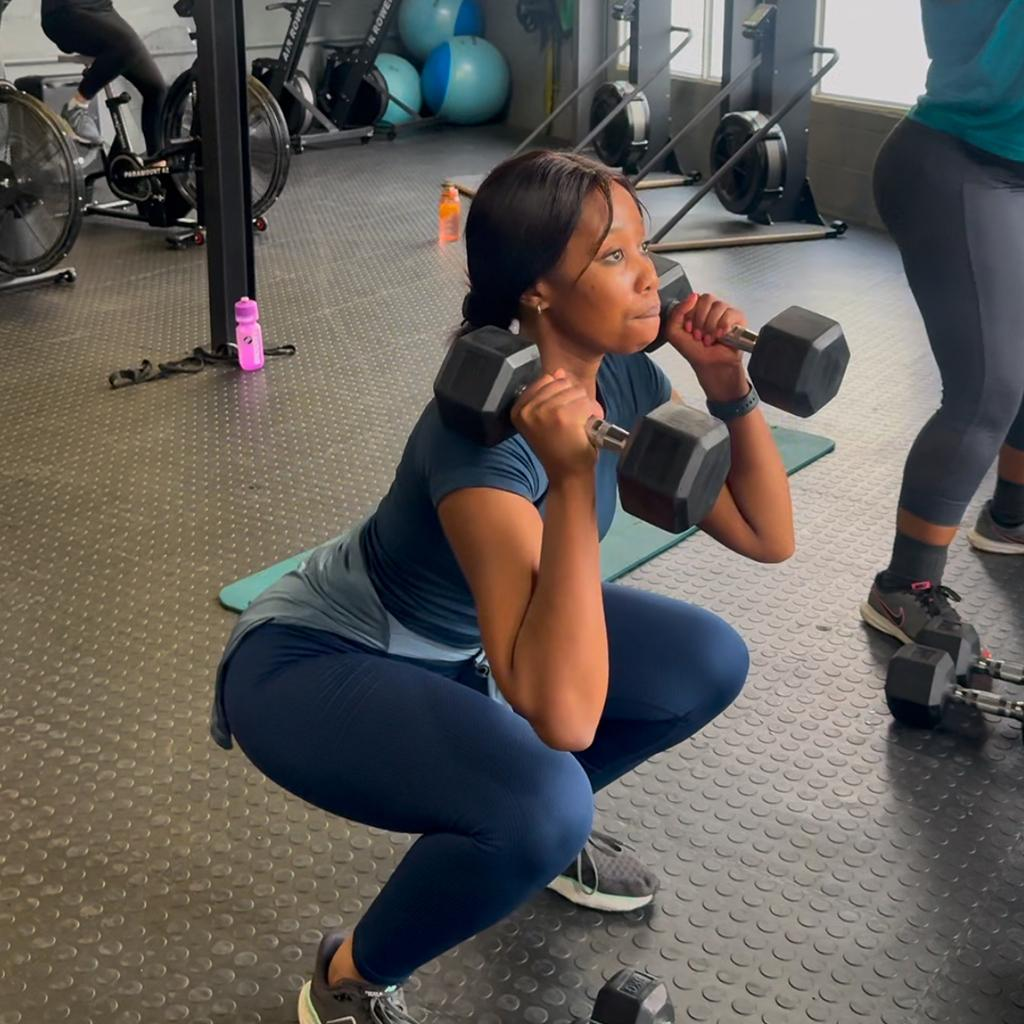
30-minute strength training session.
Saturday

Longer walk, hike, recreational activity or sport.
Sunday

Rest and recovery.
This is an example, not a prescription.
Your ideal routine should reflect your fitness level, schedule, preferences and health circumstances.
What About Short Workouts?

You do not always need a long workout.
Short sessions can be useful when your schedule is busy.
A 10 or 15-minute session may be more realistic than skipping exercise altogether.
You could do:
A brisk walk.
A short bodyweight workout.
Several sets of squats and lunges.
A short cycling session.
A few mobility exercises.
Several short periods of activity can contribute to your overall movement.
Do not underestimate the value of consistency.
When Should You Speak to a Healthcare Professional Before Exercising?

For many healthy adults, moderate physical activity is safe and beneficial.
However, some people should seek professional advice before starting or significantly increasing exercise.
Consider speaking with a healthcare professional if you:
Have a known heart or cardiovascular condition.
Have significant joint or musculoskeletal problems.
Have a chronic health condition that affects your ability to exercise.
Have been inactive for a long period and want to begin vigorous exercise.
Are pregnant and have questions about appropriate physical activity.
Experience concerning symptoms during exercise.
Symptoms such as chest pain, severe shortness of breath, fainting or unexplained dizziness during exercise require appropriate medical attention.
If you have concerns about your health or ability to exercise, individual guidance is more appropriate than relying on general recommendations.
Exercise Is More Than the Gym
You do not need to become a professional athlete to be physically active.
A healthy movement routine can include walking to work, cycling, dancing with your family, playing with your children, swimming, lifting weights, gardening or taking an evening walk.
What matters is finding ways to move regularly.
The weekly recommendations provide useful targets, but they are not a reason to feel discouraged if you are currently doing less.
Some activity is better than none.
And gradually doing more can provide additional benefits.
The Bottom Line
So, how much exercise do you really need each week?
For adults, a commonly recommended target is at least 150 minutes of moderate-intensity aerobic activity or 75 minutes of vigorous-intensity activity each week, alongside muscle-strengthening activities on at least two days.
You can spread this activity across the week.
You can walk.
You can cycle.
You can dance.
You can swim.
You can strength train.
You can build movement into your everyday routine.
And if you are starting from zero, you can begin with much less and gradually build your activity.
The best exercise routine is not necessarily the hardest one.
It is a routine that is appropriate for you and realistic enough to maintain.
Frequently Asked Questions
How much exercise do I need each week?
Adults are generally advised to get at least 150 minutes of moderate-intensity aerobic activity or 75 minutes of vigorous-intensity activity each week, plus muscle-strengthening activities on at least two days.
How often should I exercise?
You can spread your physical activity throughout the week. There is no requirement to complete a formal workout every day.
Is 30 minutes of exercise five days a week enough?
Thirty minutes of moderate activity five days a week adds up to 150 minutes, which meets the commonly recommended minimum amount of moderate aerobic activity for adults.
Does walking count as exercise?
Yes. Brisk walking can count as moderate-intensity aerobic activity and contribute to your weekly physical activity.
Do I need to go to the gym to get enough exercise?
No. Walking, cycling, swimming, dancing, bodyweight exercises, resistance bands and many other activities can contribute to an active lifestyle.
How much strength training should I do?
Adults are generally advised to include muscle-strengthening activities involving the major muscle groups on at least two days each week.
What if I am completely inactive?
Start gradually. Short walks or brief periods of movement can be a practical beginning. Increase your activity over time as your fitness and confidence improve.
Is it okay to take rest days?
Yes. Recovery is an important part of an exercise routine. The amount of recovery you need depends on your activity, intensity, fitness level and individual circumstances.
Can I exercise every day?
You can be physically active every day, but that does not mean every day needs to involve a hard workout. Alternating more demanding exercise with lighter movement or rest can help support recovery.
Start Where You Are
You do not need to wait until you have the perfect workout plan.
Take a walk.
Stretch for a few minutes.
Dance to a song.
Take the stairs.
Try a short strength session.
Then do it again.
Over time, those small decisions can become a routine.
Physical activity does not have to dominate your schedule to become part of your life.
It simply needs a place in it.